Which glazing putty should you buy?

Five different materials share the shelf label "glazing putty". Picking the wrong one is the most expensive mistake in the whole job — and the easiest to avoid. Below: what we compare, how they differ, and the specific products those comparisons refer to.

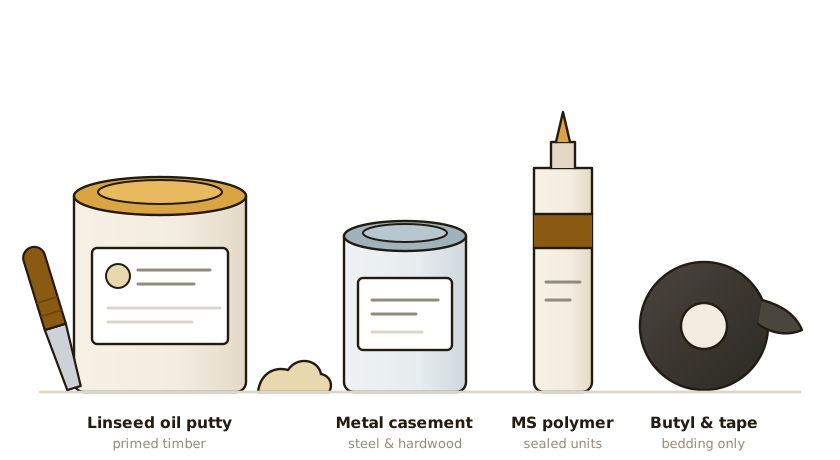
Illustration of the glazing materials compared on this page: a tub of linseed oil putty with a putty knife, a tub of metal casement putty, an MS-polymer cartridge and a roll of butyl glazing tape.

How we compare, and how this page is funded. Every figure below is taken from the manufacturer's own published data sheet — we compare specifications and stated limits, we do not lab-test putty. Product links go to Amazon UK and carry our Associates tag, so we may earn a small commission if you buy through one, at no extra cost to you. It does not change what we recommend, and nothing on this page is paid placement. We deliberately show no prices: Amazon's change constantly and a stale figure is worse than none — check the current price there.

The comparison

MaterialUse it forFramesSkins inPaint afterNever
Linseed oil putty
"multi-purpose"
Single glass, the traditional knifed fillet Primed softwood and hardwood; primed steel at a push 2–4 days7–21 days, final by 28 Sealed units · laminated · beads
Metal casement putty Single glass in frames that absorb no oil Primed steel casements, dense hardwood 2–4 days7–28 days Sealed units · laminated
Hybrid / MS-polymer
Hodgson Heritage, Repair Care Dry Seal
Sealed, laminated and acoustic glass; fast or exposed work Timber, metal, stone hours~2 hours Nothing — but it cannot be re-worked once skinned
Butyl compound / tape Bedding sealed units and bead-glazed frames Any never setsnot painted A knifed external fillet
Acrylic, gun grade Fast face glazing where speed beats longevity Timber, steel hoursquickly Heritage work — it shrinks as it dries

Cure and overpaint figures are the manufacturers' own and assume mild, dry weather — cold or shaded elevations stretch all of them. Always read the data sheet that came with your tub.

The products those rows refer to

Everything here is sold in the UK and, unless noted, has a fixed Amazon listing. Where availability is genuinely unreliable we link a live search instead of a listing that may be dead by the time you read this.

Linseed oil putty Best all-rounder

Everbuild 101 Multi-Purpose Linseed Oil Putty – Suitable for Single Pane Glass – Natural – 1kg

Everbuild

The one to reach for on a single-glazed timber window. Everbuild adds a plasticiser to help adhesion and resist cracking, and the larger packs are the sane choice once you are doing a whole elevation. Published coverage is 3–5 metres of fronting per kilogram.

Frames
Primed softwood, hardwood and metal
Sizes
500 g · 1 kg · 2 kg · 5 kg
Skins in
2–4 days
Paint after
7–28 days
Not for
Sealed units · laminated glass · bead systems
View on Amazon →
Linseed oil putty Best for one window

Bartoline Linseed Oil Glazing Putty 1kg – Multi-Purpose Window & Frame Sealant – Ideal for Wood & Metal Frames

Bartoline

The traditional British tub, and the one whose data sheet most of the numbers on this site come from: 1–2 mm back bedding, knife to about 2 mm below the sight line, work between +5 °C and +30 °C. A 1 kg tub does three or four sashes.

Frames
Primed softwood, hardwood; primed metal after sealing
Sizes
500 g · 1 kg · 2 kg (natural or brown)
Skins in
2–4 days
Paint after
first coat 7–21 days, final within 28
Not for
Sealed units · laminated glass · bead systems
View on Amazon →
Linseed oil putty Best for a big job

Hodgson Multipurpose Glazing Putty - Natural 2kg

Hodgson

Hodgson is the glazing trade's own name — a Yorkshire sealant maker whose putty most glaziers will have used. Sold in trade weights rather than DIY pots, which is what you want if a whole house is coming out.

Frames
Primed timber and metal
Sizes
2 kg · 5 kg · 10 kg
Skins in
2–4 days
Paint after
once the skin takes a brush
Not for
Sealed units · laminated glass · bead systems
View on Amazon →
Linseed oil putty

Evo-Stik Multi-Purpose Linseed Oil Putty 1kg Natural

EVO-STIK

Functionally the same material as the others — pick on freshness and pack size rather than badge. Worth knowing as a fallback when the rest are out of stock, which happens more than you would think.

Frames
Primed timber and metal
Sizes
1 kg
Skins in
2–4 days
Paint after
7–28 days
Not for
Sealed units · laminated glass · bead systems
View on Amazon →
Hybrid polymer, cartridge For sealed & slim units

Hodgson Heritage Putty - Hybrid Sealant - White - 290ml

Hodgson

The answer to the problem linseed putty cannot solve. An elastic, paintable hybrid-polymer putty gunned from a cartridge and tooled to a traditional bevel — and, critically, rated for insulating glass units and slim/reduced-sightline units, which linseed oil destroys. This is what to use when a period sash is being upgraded to a slim double-glazed unit.

Frames
Softwood, hardwood, steel and stone
Sizes
290 ml cartridge
Skins in
hours
Paint after
once skinned — same day
Not for
Being re-worked once it has skinned
View on Amazon →
Butyl compound

Hodgson Butyl 66 Glazing Compound - Natural 2kg

Hodgson

Non-setting, so it absorbs movement indefinitely. This is bedding material, not a substitute for a fronting fillet — the normal choice when the glass is held by a bead rather than by putty.

Frames
Bedding behind beads; internal and external
Sizes
2 kg (natural or brown)
Skins in
stays plastic — never fully sets
Paint after
not a painted finish
Not for
Knifed external fillets — it will not hold an arris
View on Amazon →
Acrylic, cartridge

EVO-STIK Glaziers Putty Natural - 280ml - Gun Grade Acrylic Glazing Putty

EVO-STIK

A gun-applied acrylic for when a fillet has to be in and painted fast, or when you cannot knife a joint by hand. Shorter outdoor life than linseed putty; sensible on a shed, a false economy on a sash you care about.

Frames
Face glazing timber or steel
Sizes
280 ml cartridge
Skins in
hours
Paint after
quickly, once skinned
Not for
Long-life heritage work — it shrinks as the water leaves
View on Amazon →
Metal casement putty For steel windows

Metal casement putty

A different oil blend for frames that absorb nothing, and genuinely necessary on Crittall-type steel where ordinary timber putty can stay soft against the metal for months. It is a trade line — Amazon stock comes and goes, so this is a live search rather than a fixed listing, and a glazing merchant is the more reliable source.

Frames
Primed steel casements · dense hardwood
Sizes
usually 2 kg trade tubs
Skins in
2–4 days outdoors
Paint after
once the skin takes a brush
Not for
Sealed units · laminated glass
Search Amazon →

The three tools that make the difference

Faithfull FAIKHACK Hacking Knife - Leather Handle, Silver, 112mm

The wedge-bladed knife made for chopping old putty out. Work it into the joint and tap it down towards the frame, never across the pane.

View on Amazon →

Footprint Professional Clipt Point Putty Knife, 4.5 Inch

The classic English clipped-point pattern, and stiff enough to cut a straight arris — which a flexible bargain knife cannot. A narrower blade suits glazing bars.

View on Amazon →

15mm Blued Cut Brads – 40g Pack | Traditional Glazing Sprigs for Picture Framing, Trim, Cabinet & Furniture Work | Anti-Split Steel Brad Nails

The headless pins that actually hold the glass; the putty is not the fixing. Fit them every 200–250 mm and at least two per side.

View on Amazon →

Linseed oil putty

Whiting + linseed oil · natural or brown

The traditional material and the right answer for almost any single-glazed timber window. UK products still follow the recipe set out in BS 544:1969, the withdrawn but still-quoted British Standard for linseed oil putty in wooden frames.

It cures by oxidation rather than drying, so it needs air, warmth and — critically — a primed rebate that won't drink its oil. Expect roughly 3–5 metres of fronting per kilogram. Its great virtue is repairability: a fillet can be cut back and re-faced in patches, indefinitely, for as long as the joinery lasts.

Never: on sealed units, directly against laminated glass, or in a bead-glazed system.

Metal casement putty

For non-absorbent frames · primed steel, dense hardwood

Same idea, different oil blend. Ordinary putty part-relies on the frame absorbing a little oil to start curing at the back; steel absorbs none, so a timber putty can stay soft and greasy against metal for months. Metal casement putty is formulated to set without that help — the standard choice for Crittall-type steel casements.

The frame still has to be sound, rust-free and primed. Putty applied over rust lifts with the rust, usually inside a year. Working range is about +5 °C to +30 °C, the same as timber putty.

MS-polymer putty replacements

Gun-applied · permanently elastic · overpaintable the same day

Modified-silane sealants tooled to a putty-like bevel. Repair Care's Dry Seal MP is the reference product in the UK; it cures in hours, stays flexible, and — the decisive difference — is tested as compatible with laminated glass, sealed double-glazed units and slim heritage units, none of which tolerate linseed oil.

The trade-offs are a much higher cost per metre, one-shot application (no re-working once it skins), and appearance: on a listed façade, a knifed linseed fillet is what a conservation officer expects to see. It is a trade product — a decorators' merchant is a more reliable source than a marketplace.

Butyl and glazing tape

Non-setting · for bedding, not fronting

Pre-formed strips and non-hardening compounds used to bed sealed units and glass into bead-glazed frames. They never cure, so they absorb movement indefinitely and stay watertight — but they cannot be knifed to a crisp arris and are not a visible finish. Tape is the normal way a modern double-glazed sash is bedded before the bead goes back on.

Silicone and acrylic compounds

Useful in their place · wrong on a period window

Neutral-cure silicone is a proper bedding material for sealed units. It is not a putty substitute: it can't be knifed sharp and paint won't adhere to it, so a silicone "fillet" on a traditional window looks wrong immediately and stays wrong. Water-based acrylic glazing compounds skin and paint fast but shrink as the water leaves and have a much shorter outdoor life. Fine as a stop-gap on a shed; a false economy on joinery you care about.

What about leaded lights?

Stained glass and leaded lights are not puttied — they are cemented. Leaded-light cement is a thinner, brushable compound worked under the leaves of the cames on both faces and then dusted back with whiting. Ordinary glazing putty is far too stiff for the job and will not key under the lead. Different material, different technique, same family.
Still not sure?

The decision reduces to two questions: is the glass a single pane, and is the frame absorbent? Single pane + primed timber → linseed oil putty. Single pane + steel or dense hardwood → metal casement putty. Anything laminated, sealed or bead-glazed → not putty at all.

See the full decision table →